 Laineng Technology | Solar Mobility & Smart Energy Solutions

Site Search
Searching
Popular Searches
Solar E-ScooterSolar E-BikeElectric Scooter with SeatHeavy Duty E-ScooterS109L101E03Solar ChargingV2L Power
Both are electric, but they are built on different ideas of where energy comes from. This article compares them fairly, so you can decide which fits your life or market.
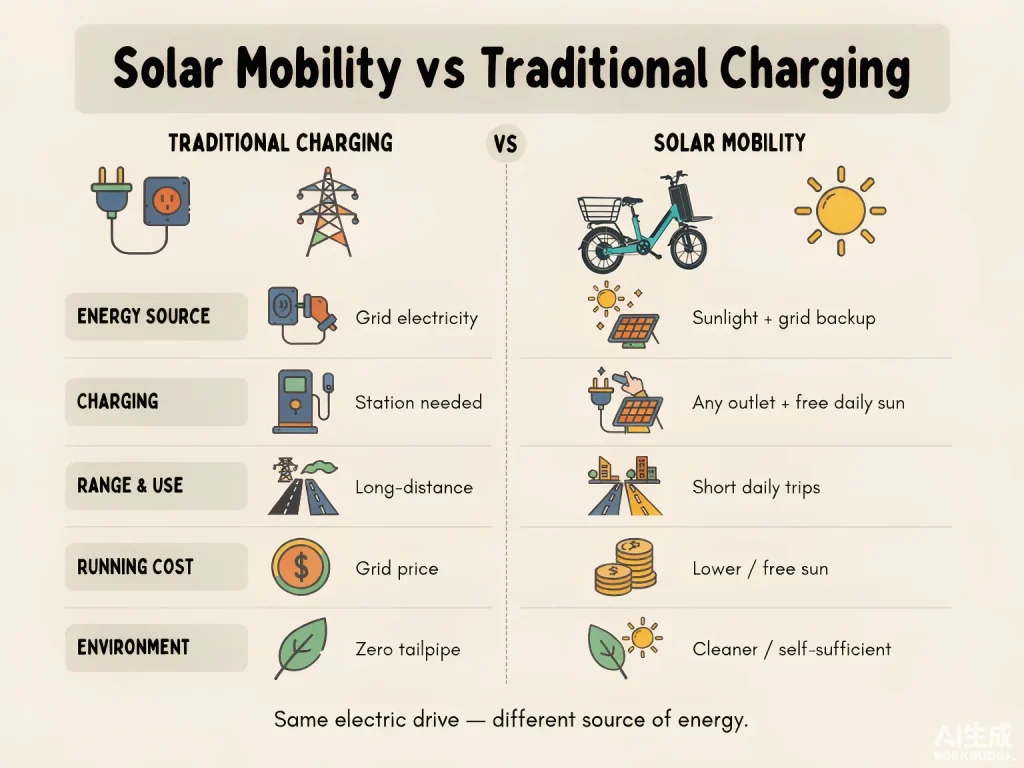
| Aspect | Traditional Charging | Solar Mobility Vehicle |
|---|---|---|
| Main energy source | Grid electricity | Sunlight + grid (backup) |
| Needs charging station | Yes | Optional |
| Generates its own energy | No | Yes |
| Dependence on grid | High | Low |
The traditional charging model assumes a grid connection exists; the solar mobility model assumes it might not — and brings its own generation onboard.
Traditional Charging:
Solar vehicle (e-bike / scooter):
For daily short-distance travel — commuting, delivery, campus, rural — a solar mobility vehicle usually creates less charging pressure than traditional charging, because the sun does part of the work.
Grid charging suits long-distance travel. Solar e-bikes and Solar scooters suit a different job: frequent, short-to-medium trips that can be passively charged in the sun.
| Cost Item | Traditional Charging | Solar Mobility Vehicle |
|---|---|---|
| Electricity per km | Low–moderate (grid price) | Lower (sun is free) |
| Charging infrastructure | Needed | Barely needed |
| Maintenance | Moderate | Low (simple light vehicle) |
| Energy independence | Low | High |
In places where electricity is expensive or supply is unstable, a solar vehicle’s long-term cost advantage becomes increasingly clear.
By “clean kilometers per watt,” solar mobility wins on self-sufficiency.
Q: Are solar vehicles slower than grid-charged ones?
A: Solar e-bikes and scooters are designed for city and rural speeds. They are built for practical daily travel, not for long-distance touring.
Q: Is a solar vehicle electric?
A: Yes — it is electric, with an added onboard solar charging layer. The difference is where the energy comes from: the sun, instead of the grid.
Q: Which is cheaper in the long run?
A: For short daily trips in sunny regions, solar mobility generally has lower running costs.
Compare the Laineng lineup — solar e-bikes, scooters and more — and find the right energy-mobility match for your market.
👉 Explore solar mobility solutions · Become a partner
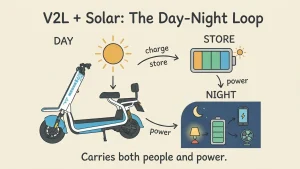
V2L explained: how the battery in a solar e-bike or scooter can power phones, lights, laptops and small appliances — and why it matters off-grid.
View details