
Recently, the solar-powered vehicles independently developed by Laineng Technology have set off a wave in the Japanese market, with their innovative technologies and environmental protection concepts attracting much attention.
Following their launch at scenic spots such as Saki-shima Island and Yattenden Bridge in Mihara City, Japan for test rides and demonstration experiments, the products have successfully drawn the spotlight from major media outlets including Mihara TV and TBS TV, thanks to their leading solar charging technology and excellent endurance performance. They have also been featured in a full-page special in OCEANS—Japan’s third-largest magazine—becoming a hot topic in the local green mobility sector.
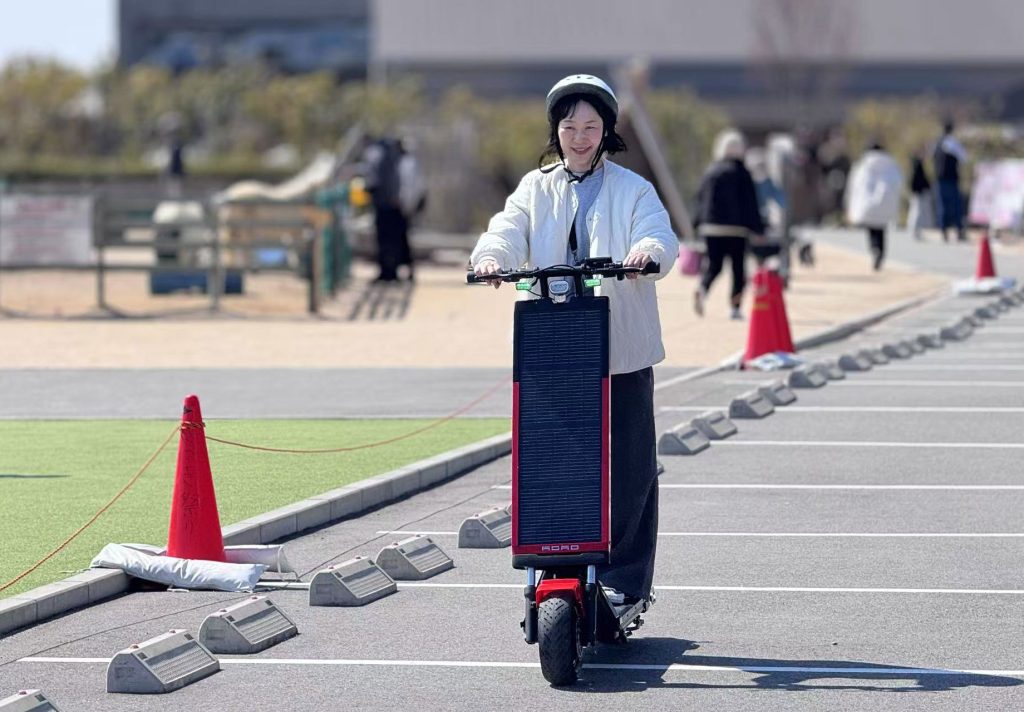
Debut in Japan: Solar-powered black technology conquers scenic spot scenarios
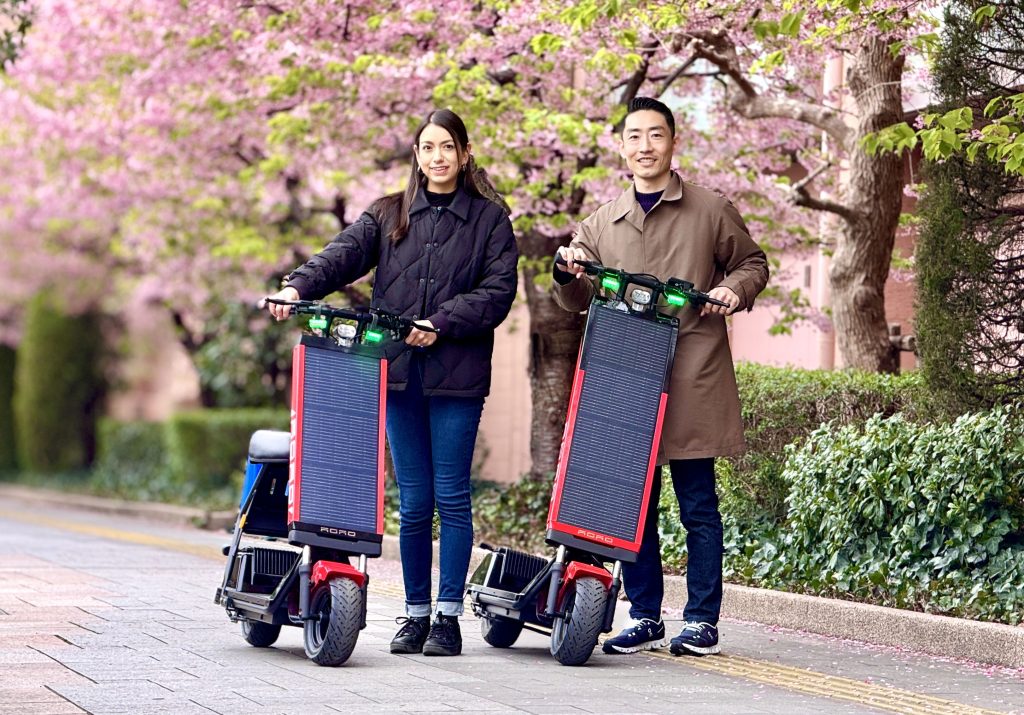
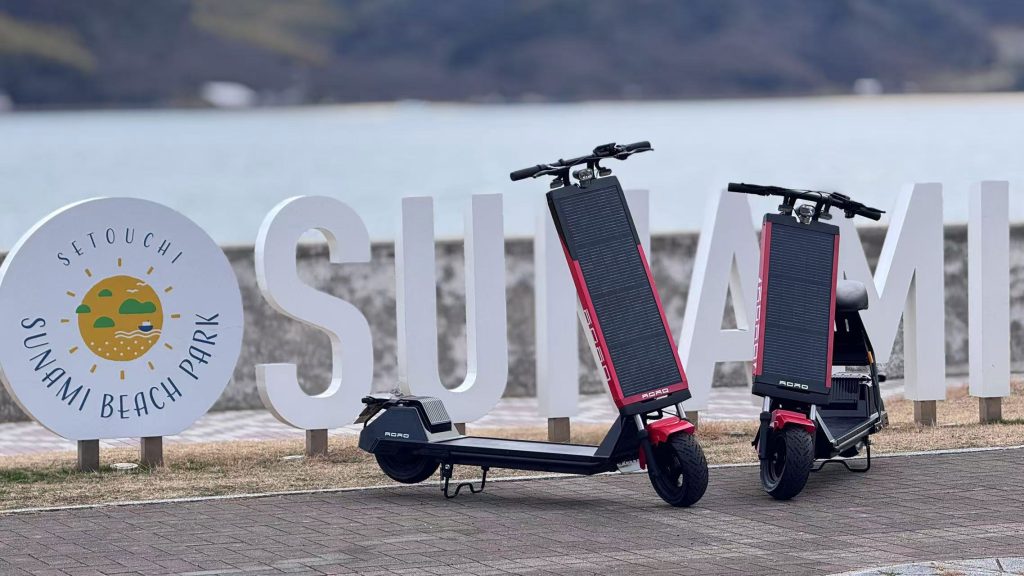
As one of Japan’s first introduced “solar-powered automatic charging micro-mobility tools”, Laineng Technology’s solar-powered vehicles officially landed in Mihara City on February 7, launching test rides and demonstration experiments first at Saki-shima Island and Yattenden Bridge. Equipped with high-efficiency solar panels, the vehicles can achieve “solar-powered automatic charging”. With a full charge, they have a range of over 30 kilometers, and can gain an additional 10-30 kilometers of range daily through sunlight. There is no need for external charging equipment at all, and the advantage of zero electricity cost is particularly prominent in scenic spot scenarios.
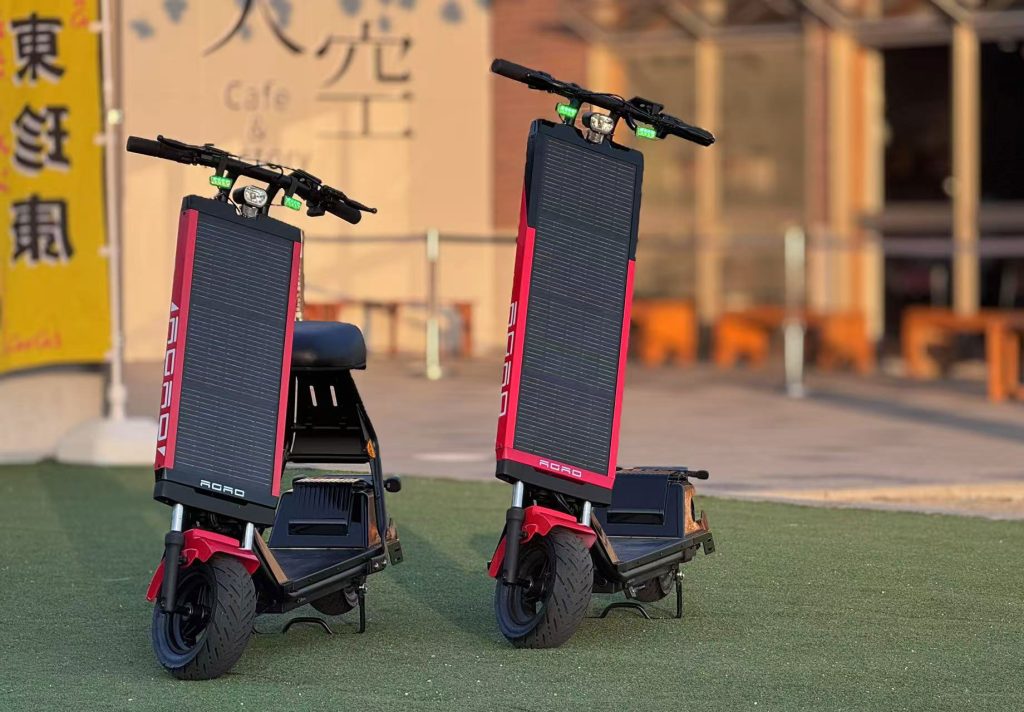
During the demonstration experiment carried out during the cherry blossom season on Saki-shima Island, the vehicles shuttled between Mukaida Port and the Senbon-zakura Scenic Area at Tonomine. They maintained stable performance even when traversing complex road conditions. The safety design with a maximum speed of 20 km/h (set according to Japanese requirements) and IoT remote management functions (such as remote locking) have been highly recognized by the local government and tourists. At the test ride event, the Mayor of Mihara City and the President of the Tourism Association personally tested the vehicles and affirmed their dual value in low-carbon travel and emergency power supply (serving as a power supplement source).
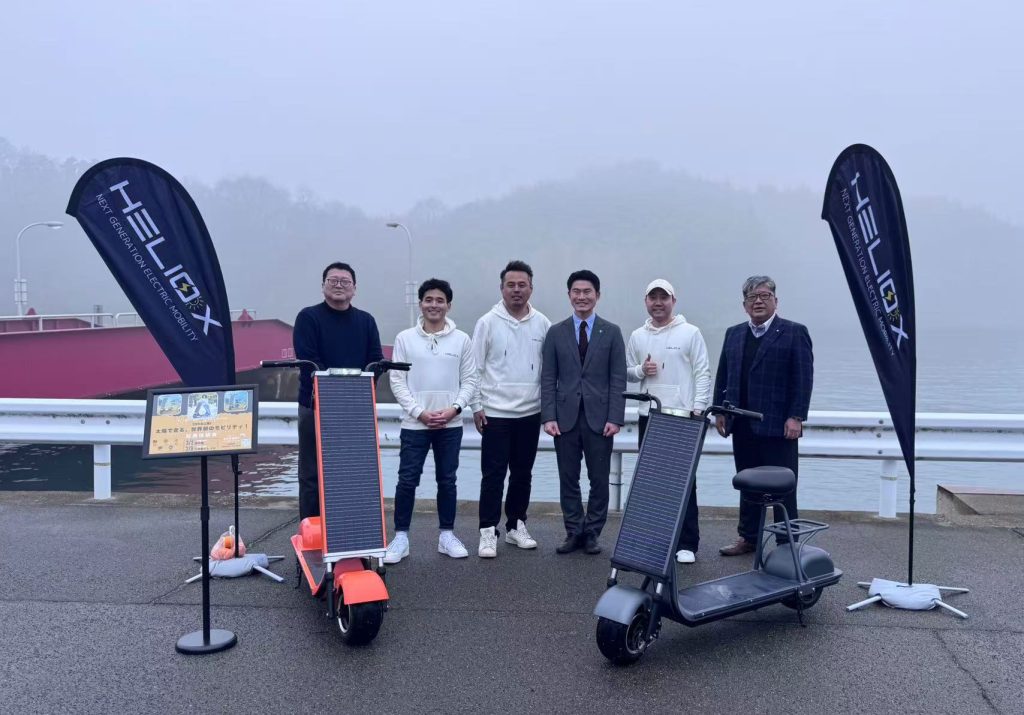
Media Focus: Technological Breakthroughs Cause Industry Sensation
Mihara TV specifically pointed out in its report that Laineng Technology’s product is the first micro-mobility tool in the Japanese market to realize “solar self-charging + license-free driving”. Classified as a “specific small prime mover bicycle”, it not only meets the demand of users over 16 years old for license-free driving, but also ensures safety through speed limit design (maximum speed of ≤6 km/h on sidewalks), providing a brand-new solution for short-distance commuting in scenic spots and urban areas. TBS TV, under the title Future Transportation: How Solar Energy Changes Urban Mobility, conducted an in-depth analysis of the light energy conversion technology equipped in the vehicles.
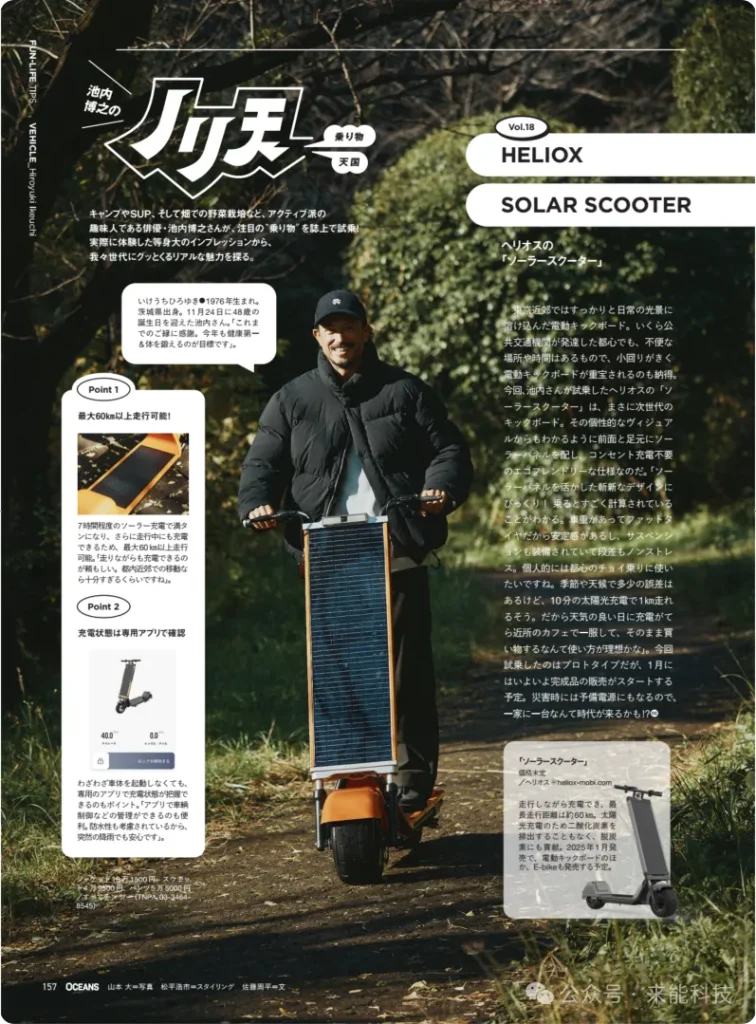
Japan’s third-largest magazine OCEANS featured a full-page report titled Walking Solar Power Stations: Laineng Technology Redefines Micro-Mobility, systematically introducing the product’s technical parameters and application scenarios. The article mentions that the vehicles can monitor power levels, location, and usage status in real-time via the IoT system. Operators can remotely complete vehicle dispatching and fault diagnosis without manual inspection, significantly reducing operation and maintenance costs. This innovative model is regarded by the industry as “a milestone in the integration of smart transportation and green energy.”
Market Outlook: Embarking on a New Journey of Global Green Mobility
The successful launch in the Japanese market marks a crucial step in Laineng Technology’s strategic layout in overseas markets. It is reported that following Mihara City, cities such as Tokyo and Osaka have initiated negotiations for introduction, planning to integrate solar-powered vehicles into urban public transportation systems for scenarios like tourist shuttle services and community commuting.
In the future, Laineng Technology will continue to deepen its research in solar energy application technologies, promote the popularization of “photovoltaic-storage-charging integration” solutions in more countries and regions around the world, and use innovative technologies to help build a zero-carbon transportation network.